Shape and Substance

meditations on faith and church

Silence Falls

Silence falls in moonlight on a manger bare
in the gath’ring midnight, ‘ere the shepherds’ care;
in darkness waiting, still in death’s own fold,
we anticipate the ancient story told.

Silence falls in whispers, voices hushed in fear;
hearts will quake at this: the time is drawing near.
Though kings may plait for him a crown of thorns,
we anticipate the kingdom yet unborn.

Silence falls in heartache, silence pools in blood;
stillness in the earthquake, shelter in the flood.
Time seems to wait, the whole world holds its breath;
we anticipate the last approach of death.

Silence falls in sorrow on the sylvan hill;
silence in the graveyard, all waits cold and still.
Too long we pace the paths among the tombs;
we anticipate a new way coming soon.

Silence falls in wonder in the light of dawn;
heavens rent asunder, darkness now is gone.
Stone rolled away, the tomb yields up its prize.
We anticipate with sunlight in our eyes.

Note: Written as an Advent/Paschal Vigil hymn, this poem may be sung to the tune NOEL NOUVELET (the tune for the familiar French Christmas carol, “Sing We Now of Christmas”).
#MeToo

Your stories fill my eyes and ears:
your blood is on my hands
and the hands of those both like
and unlike me.

Perhaps we are not friends. Too much
unknown lies between us, untold tales
of hidden hurts and heartaches.
Hollow trust can bear no weight.

We are not allies. You see in me
everything you rail against:
the security of privilege, the calm
of comfortable distance.

So I will be your witness. I will see
when you are afraid, or filled
with rage, or broken and alone.
You are not alone.

I will testify that your words
are true, your cause is just,
your war is righteous although
it is not mine to wage.

  • Note: This poem was circulated via my Facebook page a few days before appearing here. I am grateful to the many of you who responded to it there, both appreciatively and critically.


Woodwork

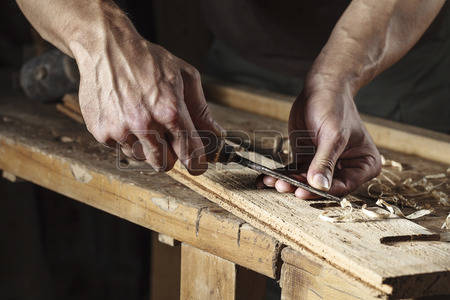
It’s about the blood—
joining boards at angles,
edges are negotiations
prone to pinch,
nails pierce like talking points,
splinters burn like lightning
beneath the skin—
red stains in the palms of hands.

It’s about the blood—
the labor of little cuts,
saw-blade nicks,
chisel slips on turning lathes,
abrasions from rough surfaces
in rapid motion,
currency to pay
for chalices and tables,
for chair legs in church parlors,
and for crosses. Always crosses.

It’s about the blood
smeared on every doorpost,
pulpit, pew—
forensic faithfulness:
a wound for every wonder.
Impassive as a judge’s smile, the paschal lamb
has nothing more to say.
The scraping of the planer’s blade
smooths the ragged faces of the cross
and with every hammer-blow the blood
sinks deeper in the heartwood
unseen and silent,
until all that’s left is argument, quid pro quo.
Leave the dead behind
in the night when angels pass,
and head for parted water.

But it’s about the blood—
crying out from every field
and every brother without a keeper,
every lamb laid on every altar,
every cup on every covenantal Table
where the wounded Body lies
awaiting autopsy
while survivors lurk in hallways
fighting over the personal effects.
45514539-closeup-of-a-carpenter-hands-working-with-a-chisel-and-carving-tools-on-wooden-workbench.jpg

A Prayer Before Advent

Mark 13:24-27
Hurricanes Harvey and Irma. Texas and Florida

In the wind that howls, the deep’ning dark, when rains begin to fall
and the hopes we cherish most in life are shrouded in their pall,
then at last we lift our vision; then at last we strain our ear
for the word of sweet deliv’rance: our rescuer draws near.
Teach us, Lord, to rescue others, and to find as we are found,
until all your people reach the shore and stand on higher ground.

O that you, O God, would tear the skies and to the earth descend
‘mid the trembling mountain’s tumult, ‘mid fear that knows no end.
Though the stars may leave their places, constellations cease to be,
though the world we know and all we love lost to memory,
still we wait, Lord, rapt in wonder, ‘til morning’s sun shall rise,
‘til the clouds are rent asunder, and the tear of heartache dries.

‘Til that day, before the table spread, the font, the spoken word
we will gather as a people and let lament be heard
for your promised reign of glory, for tomorrow’s dawn of peace,
for the helpless and the hopeless, the prisoner’s release.
Quickly come, Lord, to your people! The night grows e’er so long!
We believe; help now our unbelief, ‘til all our hearts are strong.

Note: In writing this hymn, I have in mind the tune, Thaxted (#341 in Glory to God, the hymnal of the Presbyterian Church (U.S.A.), drawn from the “Jupiter” movement of Gustav Holst’s magnificent suite, The Planets. The poem was written to be sung, and permission is hereby granted for its use in worship or other ecclesiastical contexts. 

Daedalus, Afterward

[Note: A few days ago, my friend Dana Hughes posted on her blog (dlshughes.wordpress.com) a lovely poem entitled Icarus, about the man who donned wings of wax and feathers and flew too close to the sun. But there’s another story here, too: that of his father, Daedalus, who made and tested the wings, and who warned his son about the dangers–real and metaphorical–of flying too high.]

Mine the funeral to plan,
mine the grieving mother
who’ll demand that I explain.
I don’t know why I bother.

He never listened anyway,
he was too much compelled
to heights, no matter what I’d say:
that the wax would melt,

that the fall to earth would be
his last. Damn the consequence
for his mother or for me.
I thought I might convince him,

but my careful calculations
—how much moisture, how much heat—
were no match for aspiration
to see clouds beneath his feet.

Engineers are patient minds;
I moderate my passions
by what my testing finds.
I take my joy in rations

small enough to manage
should something go awry;
I estimate the damage
before I try to fly.

I know that bodies break.
But I cannot understand
why his the myth of greatness,
and mine the funeral to plan.

Eclipse

There should have been some reckoning.
As if the passing solar terminator
moving at the velocity of despair
might occasion no alarm,
as if sailors on an ancient ship
whose course drops off the world’s edge
might not attend the warning
on the charts: Here there be dragons.

There is a wonder in the dark.
The curtain in creation’s temple
that separates mysterious and mundane
parts to permit the curious a peek
and sacraments leak out around the edges.
Solar flares light matches in the clouds,
and the hair of the world is on fire.
The Holy of Holies is on the loose.

Shall nothing change?
Shall the light’s return not stiffen
the resolve to beat back the dark?
Mute conscience pantomimes its witness
to pain and folly at the gates of Hell.
We are a culture of observers.
We smile and watch the light of the world go out
looking through these special paper sunglasses
so as not to burn our eyes. Abandon hope.

th.jpeg

They Were Soldiers

They were soldiers.
Some were sons of farmers, some of planters.
Some held slaves. Some could barely hold a job.
Some believed the Cause. Some had no cause to believe
in anything but themselves, and barely that.
As soon as shots were fired in anger
some signed up because they sought adventure.
But some waited in the woods, moving quietly
so as not to draw attention from the Home Guard.
They were dragged from sleep, cuffed and chained
like the slaves they would too soon fight to keep.
Handed uniform and gun, one and all were told
they were just soldiers, nothing more.

They were bodies.
Some were whole, some were missing parts,
arms or eyes or frostbit toes or fingers.
Some were missing altogether, slipped away
in morning mist to havens in the hills of home
as soon as sergeants called the daily roll.
Those that stayed were loyal not to cause
or country, not to way of life, but to each other.
They used their bodies to shield a brother
from canister and shell, minié ball and rifled shot.
It was the only thing that mattered. It was love
in the field of blood and bone. And when it was done
they were just bodies, nothing more.

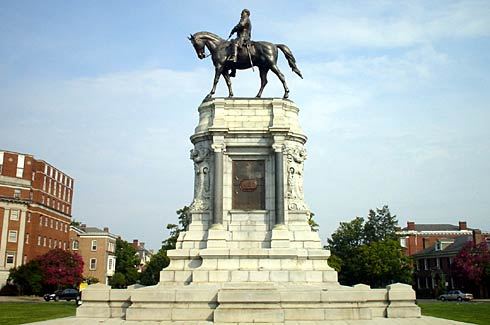
They are statues.
Some are effigies of generals, some of grunts.
Their metal gaze seems measured to some distant vision
dead in fields of war and somehow late revived.
We see it for them, God help us; and watch it grow
wherever hearts are grieved and minds are lost
in angry tales of sadness only demons tell.
Around their steeds swirls an evil tide and, rising,
rage is flowing like Hell’s river at their feet.
Their pedestals are useless dams for reservoirs
of darkness where fools bend the knee to drink.
These iron angels sing no glorias. Take them down.
They are just statues. Nothing more.
36.jpg

Mr. H’s Ordination

Do you trust in Jesus Christ your Savior,
acknowledge him Lord of all and Head of the Church,
and through him believe in one God,
Father, Son, and Holy Spirit?
–the first question for ordination in the Presbyterian Church (U.S.A.)

Well, do you?

It’s not a choosing, or a being chosen,
not a choice but the end of choices.
It’s the wild mounting desperation
of holding back your breath under water
until the will submits, is overcome
by the mindless lungs’ irrational demand.
Even if it drowns you like a rat.
Do you trust like that, Mr. H?

Who cares a fig for Lords and Heads?
This is existential, not ecclesial.
We’re talking oxygen, on those days
when a body’s desperate to breathe,
days when everything comes crashing,
when the sacred All-in-All amounts to nothing
and Christ’s Body yields its neck to the guillotine.
Do you trust when times are lean, Mr. H?

Three in one and one in three: an axiom
of theology. But the only Trinity
we know is world and death and fire
as often smothered as smoldering.
In the pitch-black cave-dark, we intuit light.
Put your hand on the triune rock:
creation’s basement, our prison, and reprieve.
Is that what you believe, Mr. H?

These skittish truths we harness to our stars
come uneasily to words; they bolt
like rabbits down a hole or fly
like birds to branches just beyond our reach.
Best teach the tongue restraint and watch your feet
along this darkling path we’re following.
It’s easier to stumble than to rise.
Will that suffice to make you wise, Mr. H?

When You Lied

“…lies, plain and simple.”
James Comey
9 June 2017

When you lied
I became false,
untrusting and untrusted;
my rage rings hollow in my ears,
my righteousness is disingenuous.
I am no longer witness
but complicit, a co-conspirator,
cuckold, a piebald jester
with painted face and belled cap,
a player in the mummer’s game.

I have no memory
of truth, or confidence
in trueness, and when I speak
I add lie to lie to lie.
We will die
this way, all of us, die
our death of lies and lie
in each other’s embrace
in the sweet sarcophagus
of our self-justification.

But may there come a time to be
reborn, newborn, first-born
of a new creation,
birthed from dust of rocks
beneath the ache of time,
and molded of the spittle of stars,
fresh-breathed into another garden
before the tree bears its knowing fruit
and there are not yet questions
to be asked and answered.

Insomnia

Nothing is so cold as half-spent rage.
Dismiss
apology as little more than vague
refrain
offered while the chorus leaves the stage.
Release
the pent-up inner storm where masquerade
as rain
the tears that might have made us more than this.

Still, her sleeping rhythm speaks kindly
in the dark,
and the silver moontide through the blinds
revives
a hope of healing, though it leave behind
a scar,
yet another wound, like all its kind,
survived.
The best we do is not the best we are.