Maybe it's the sour mood I'm this inauguration day. Maybe it's the nagging presence of the black dog. Maybe it's the cold and cabin fever. But here's a poem I've been pecking at for a while.


A Poor Place for Gods

‘Soon,’ said the crackling voice of the flame, coming from behind him, ‘they will fall. Soon they will fall and the star people will meet the earth people. There will be heroes among them, and men who will slay monsters and bring knowledge, but none of them will be gods. This is a poor place for gods.’
Neil Gaiman,  American Gods, 2001.

This is a poor place for gods.
You wouldn’t know it from the way we pray
and swear
and warble praise choruses ad nauseam
to Something we have never seen or heard
or known
save in the chancels of our imaginations.
Take a peek at the treasures we lay up
for ourselves:
small deities pressed in the family Bible
alongside the azalea plucked from the 13th hole
at Augusta National,
demigods riding dolphins in the surf
as we watch from our beachfront condos,
centaurs chatting
over stale-brewed coffee, long gone cold,
at last week’s Life Group Meeting.

This is a poor place for gods.
Americans don’t believe in gods
(unless they come down to us on golden escalators).
We believe in
in fanciful yesterdays and fantastical tomorrows
(though not in workaday todays).
In border security and security systems.
In LifeLibertyandthePursuitofHappiness
(though not if Happiness runs too fast).
In video porn. The NFL. And QAnon.
In Somebody Else’s Fault.

This is a poor place for gods.
Gods demand sacrifice and obedience,
two skills
we never managed to acquire
except on battlefields and in delivery rooms,
and then
only in service of the proximate.
Never the Ultimate. We dare not contemplate
the Ultimate.
That would mean there is a limit
to what we can manufacture, take by conquest,
or simply buy
even if the dollar is losing ground to the yen.
Americans are our own Divinities.

This is a poor place for Gods.
Still there is, famously, a bustle in the hedgerow
a stirring wind,
a shaft of sunlight, a never-ebbing tide,
the faintest rumble from just over the hill.
One would think
that Something is afoot here. Still,
there must be (mustn’t there?) a meteorological explanation
for the meteor
slashing the night sky like a saber
crashing headlong into the whimpering world
and exploding,
eviscerating our exceptionalism
and making way for another Way of Life.

We worry about sea level rise. But really,
weren’t we promised fire not flood next time?

[I hesitate to cite Gaiman, given the recent allegations of sexual assaults against multiple women (see Lila Shapiro, “There Is No Safe Word,” in New York Magazine, January 2025). That said, Gaiman’s alleged reprehensible behavior seems to me to illumine the ironic truth lurking in his phrase: “none of them”—and none of us—“will be gods.”]
Pat came home from a Bible study this afternoon smiling that smile she smiles when she knows she’s going to rattle my cage. They were studying Romans and, she said, her grin broadening almost imperceptibly, they got into a discussion of predestination and free will. She knows this is like waving a matador’s cape in front of a bull. I can’t resist.
I tried, really, I did. I asked questions, you know, like you’re supposed to do to demonstrate that you’re not jumping to the conclusion you’ve already jumped to. “What did you conclude?”
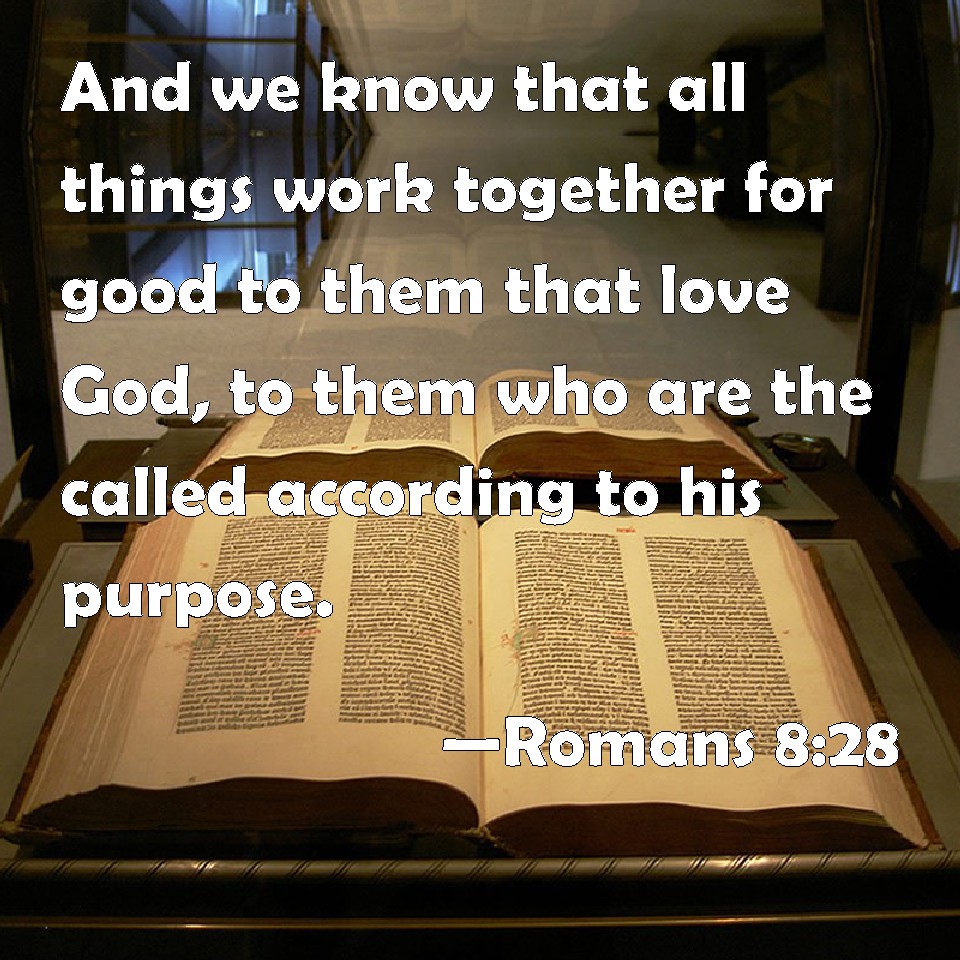
Well, she said, several of the women (all of whom except Pat are of the conservative evangelical persuasion) object to the notion of predestination altogether. They believe in free will, and in the power to/necessity of choosing to believe in Jesus as a prerequisite for salvation. “Then what,” I asked, “do they do with Romans 8:28” (you know: “In all things, God works for good” etc.)?
Well, they apparently feel that this only applies if you already believe in Jesus and are saved. “But that,” she offered, “was not what I said.” She had me now, and she knew it.
“And what did you say?”
“I said that we have free will to make our own choices, but God in God’s sovereign freedom uses all those choices, no matter what they are, to accomplish God’s will.” Pat, after living with me for 35 years, is a fair country Reformed theologian.
Here we reach the first problem. After a lifetime of trying to live out the Reformed theology John Leith taught me in the early 1970s at Union Seminary, I have given up. I probably still cling, perhaps unconsciously, to some remnants of that Augustinian-Calvinist-Barthian edifice, but I have to confess that it’s mostly in ruins around my theological feet.
“Well,” I ventured cautiously (although not nearly cautiously enough), “I think you still have a problem. Instead of preserving free will, you have obliterated it. If God’s permits our choices but uses them in crafting the divine will, whether we choose as God chooses or not, then our choices don’t have any ultimate meaning. You pretty much trump free will with the ace of Pauline predestinarianism.”
“Then what would you have said?” She was grinning openly now, since she knew she had lured me in and hooked me as deftly as if she had drifted a Chubby Chernobyl downstream to a holding trout.
I should add that she does this frequently—presents some theological gordian knot in the full knowledge that I can’t resist declaiming upon it from the rarified heights of my vaunted theological training. She knows that I am a sucker for the sound of my own voice and, worse, will never pass up an opportunity to air out my latest foray into heresy. I think she gets a kick out of watching me skating on intellectual thin ice: there is always the potential I might fall through and give her the show she is dying to see: a mansplainer extraordinaire sinking under the weight of his own arrogance.
Of course, that’s exactly what I did.
But now that the conversation is over and I’m brooding over the inadequacy of my explanations, it all has me wondering whether there might be a way out of this dilemma. It might involve thinking differently than we normally do; indeed, thinking in a way that, ultimately, we cannot think. It involves thinking like the Eternal.
Here’s what I mean. We are finite creatures, and a part of our finitude is our enmeshment in the framework of time. We are time-full, in the sense that all our thinking and acting and being takes place within the scale of linear, episodic development. This happened, and then this happened, and then this happened. Add causality to that, and you get this happened, which then caused this to happen, which then brought about this. We think that we make choices, and those choices cause consequences, and we then make other choices to deal with the consequences of our first choices. And so on. Free will is the expression of this time-full-ness as regards our living before the reality we call “God.” I make this choice—to believe or not to believe, to “accept Jesus as my savior” or not—and the consequences of that choice are (a) a presumed place in some scheme of salvation that stretches beyond my death, (b) a comfort in the present that I have a certain knowledge of my enduring security, and (c) usually, my participation in community with others of similar faith commitment in both celebration of our securities and (hopefully) service to others in the name of the Securer, Jesus Christ. In the minds of many, it is also possible for me to undo my security and lose both my comfort and my communal place if I cease to believe, if I “backslide” into faithlessness and moral turpitude. But regardless which way I am traveling on this soteriological Jacob’s ladder, the movement is just that: movement. Which implies linear temporal development. Time-full-ness.
It seems to me, however, that the Holy is not time-full. The Holy is the Eternal, in Greek aiónios, which comes over into Latin as aeternus and means “un-timed” or “not subject to time.” Because the Holy is not bound by time separated as it is into distinct moments, within the Holy all time is one time, which is to say it is no time, or time-less. To the Holy, all human choices and sequences and narratives and developments are all simultaneously present in the Eternal Moment. There is no lineal development; within the Holy, all moments and all choices and all times and all places are the same action, time, or place, which is to say the eternal. It’s not that “God knows what you will do,” and uses it, whether you want it or no, to accomplish what God intends. It is rather that in the Eternal, you have chosen and will choose and are choosing all at the same time, and without distinction or movement or change. It looks and feels and seems like—and indeed, is—movement and change to us, here in our time-full linearity. To the Eternal it is the one all-encompassing present. It is not that the “God” is working out our salvation for us; it is that in the Eternal, not-saved and saved are all the same, all one in the One within whom there are no distinctions or differences.
Which then leads me to wonder (and here is the heretical part, so roll up your rosaries and batten down your Scofield Chain-Reference Bible) whether there is any ultimate meaning in the word, “salvation.” Whether “being saved” is, for all intents and purposes not merely a “done deal” but a non-deal. Or, to be more precise, whether what we call salvation has meaning only to us, entrapped as we are in our time-full-ness, as a symbolic mark of what seems to us a change in life in relation to others and to that which we imagine as “God.” It is not meaningful to the Eternal, to the One, in whom all things and all times and all conditions are one and within whom there is no change. We are already saved and not-saved, have always been saved and not-saved. Within the One, there are no distinctions, and hence no development.
The Neo-Platonists understood this better than we do, I think. Coming out of the tradition of Greek philosophy, where the quest was for the One radically simple Thing that underlies all things, they understood “God”—or, as Plotinus named it, the One—to be radically Simple. That is to say, the One is one because within the one there cannot be two. Within the Eternal there cannot be a yesterday, today, and tomorrow because there is only the Eternal. Within the Holy, there is no unholiness (and therefore no “good” or “evil”) because there is no dichotomy between holy and not-holy. There is only the radical Singularity of the One. There is not even Being, because Being implies non-being. There is only the One. And within the One, all things are one thing, and the one thing is the One.
So, am I saved? Yes, and no, and who cares? Here in my time-full-ness, I can worry about it, or not, and it matters neither fig nor farthing. In the Eternal Moment, as Qoheleth says, “What has been is what will be, and what has been done is what will be done; there is nothing new under the sun” (Ecc. 1:9). Salvation belongs to the category of the time-full, not the time-less Eternal.
Do I have free will? Yes, and no, and who cares? Here in my time-full-ness, it seems to me, and indeed it is, that I make choices that have consequences. But my choices and their consequences, as well as my states of mind and being both before the choices and after the consequences are not distinct movements and actions and conditions, but all one reality. Hitler and Pol Pot and the Donald may seem evil to me (or, at the least, banal) and their actions heinous (or, perhaps, merely ludicrous). But their words and actions are all one in the One, in whom Good and Evil, while mattersome to us, are one. Free will belongs to the category of multiple actions-and-consequences, not the radical Simplicity of the One.
One of the hallmarks of Reformed theology has been its emphasis on election, God’s calling of people into special relationships of service and salvation. But if salvation has no more meaning than I think, then is not “election” drained of its significance? And if either none of us or all of us are “saved,” does this not also mean that either no one or everyone is “elect?” Which, it seems to me, rather lets the air out of the argument that anyone—me, you, Presbyterians (however frozen in our chosenness), Israel either ancient or modern, the United States—has any special relationship with the Holy. I said in some written piece of mine somewhere that election was God’s biggest mistake. That’s wrong. The mistake—presuming that special status in relation to the One is possible, let alone desirable—is our mistake. The Holy has nothing to do with it.
There is a great deal more to say by way of conclusions to be drawn—to wit: who was Jesus and what is the significance of the crucifixion, if not to save us? What is the trinity, if the One is indivisible? What is the “Christian hope” if temporal linearity is not basic to the divine nature?—all fodder for other hoped-for conversations. But perhaps I am in deep enough dookey as it is and would do well to shut up now. My sole comfort lies in the fact that I am an old man who no longer has ecclesiastical, pastoral, or educational responsibilities. What I think doesn’t really matter anymore, which is a daily source of relief. If you’ve managed to hang with this all the way to the end and feel so inclined, I am grateful to you, and I would love to hear what you think, either by return email or comment on the blogsite.
Epiphanies always have consequences. Apocalypses always require assembly.
A star. A distant pin-prick—maybe light from an ancient orb gone supernova?— portends the end of something, and the birth of something new. But what? Or who? Why should this punctuation in the dark become the instigation for the journey?
The journey. Set your foot to paths uncharted impelled to some uncertain destination, ask inconvenient questions of those whose power disinclines them to acknowledge answers, barter time from old, bloodthirsty fools who sit on queasy thrones and dread the star.
The star. It moves, yet night to night the same point of light in the aching windswept darkness, the cold black emptiness of space. Like you, it makes its own strange journey, setting sail to catch the breath of God. It finds its destination in those eyes.
Those eyes. The child sees you, and calls your name— a name you had forgot, or did not know you knew, a name whose riches, undeserved, will cost you everything you have, and more. He looks at you, and in his eyes you see the rising and the setting of your hopes.
Your hopes. Leave them behind, these selves you carry the journey long, like treasures of the heart; return, then, empty-handed, knowing nothing but the light behind the dark eyes of the child. Be haunted by that light. It does not fade even as the star returns to darkness.
Darkness falls. You are night-blind, and groping. Go home a different way, if home at all.
+
Encounters with the Holy change everything. They reverse the polarities of existence. They cost you everything, and even everything is not enough. They drain you of yourself and replace you with another Self you did not ask for and do not understand. They require you to die in order to live. “Yet not I who live,” writes Paul, who met the Holy on the Damascus Road, “but Christ who lives in me.” Jesus, says Mark, met a demon-possessed man near Gerasa in the Transjordan. When Jesus exorcised them, the demons “begged him earnestly not to send them out of the country.” Why do demons want to stay home? Do they crave domesticity, fear the uncertainty of wandering and wildness? Are the comforts of home antithetical to the coming of the Holy? And is that why those possessed by the Holy so often find themselves pilgrims and wanderers? From Cain to Abraham to the magi to Jesus to the desert fathers, they fling themselves out into ferocious landscapes to seek the Holy in places where life and death are inconsequential matters. Does the Holy drain away who you are so Something or Someone else can fill you instead, possess and mold you, make of you something you never intended to be? Does “home” cease to be home anymore, so that going home is but another journey into a far country? 1
1 This poem of mine, along with the accompanying commentary printed here, first appeared in Insights: The Faculty Journal of Austin Presbyterian Theological Seminary, Fall 2022. I subsequently included it, in edited form, in my volume, The Longing: Poems (Eugene OR: Resource Publications, 2024).
Now winter downs the dying of the year, And night is all a settlement of snow; From the soft street the rooms of houses show A gathered light, a shapen atmosphere, Like frozen-over lakes whose ice is thin And still allows some stirring down within.
I’ve known the wind by water banks to shake The late leaves down, which frozen where they fell And held in ice as dancers in a spell Fluttered all winter long into a lake; Graved on the dark in gestures of descent, They seemed their own most perfect monument.
There was perfection in the death of ferns Which laid their fragile cheeks against the stone A million years. Great mammoths overthrown Composedly have made their long sojourns, Like palaces of patience, in the gray And changeless lands of ice. And at Pompeii
The little dog lay curled and did not rise But slept the deeper as the ashes rose And found the people incomplete, and froze The random hands, the loose unready eyes Of men expecting yet another sun To do the shapely thing they had not done.
These sudden ends of time must give us pause. We fray into the future, rarely wrought Save in the tapestries of afterthought. More time, more time. Barrages of applause Come muffled from a buried radio. The New-year bells are wrangling with the snow.
Every New Year's Day, I find myself drawn again to this poem. Richard Wilbur is, I think, my favorite American Poet (although there are several candidates for that honor). His poem "Year's End" is somber, dark—hardly the sort of sentiment appropriate for a celebration like New Year's Day. One commenter I read spoke of the poem as Wilbur's meditation on death. I can see how he got there. I also think that's not inappropriate for the day in general. After all, New Year's Day is all about the passage of time, its inexorable march toward death and decay, whether the things decaying be leaves or wooly mammoths or little dogs preserved in pyroclastic Vesuvian ash. But it's not death that draws my attention here.
Rather, it's Wilbur's phrases in the final stanza that summon my response. "We fray into the future," he says, and that image always seems the right one to describe our disorganized, disheveled, discombobulated slide into tomorrow. Moreover, the future we fray into is "rarely wrought/ save in tapestries of afterthought." For all our thinking about tomorrow and tomorrow and tomorrow, it's by and large thinking devoid of any real plan other than fancy and fantasy. And when at last the real future arrives, we are once again confronted with our unpreparedness. We can but pray for "more time, more time."
The truth, of course, is that we cannot see the future except as it is a projection of the trends of the recent past or the lessons of accumulated experience. Even if we could, I suspect, the novelty would wear off quickly and we'd yearn for a return to the days of shooting from the hip. Long term planning is not written into our genes.
And that, I think, is what makes this poem resonate with me. Wilbur knows a truth about the way we live: that the possibilities of the new will always be "wrangling" with the frozen past, and we will always struggle to break free of the icebound torpor of our behavior. Whether it's a belated (indeed, non-existent) response to global warming or a return to a fantasized national greatness, or just an inability to live out resolutions to eat less and walk more, we live our lives facing backward, dwelling in an imagined past that never existed and denying the reality of a future looming ahead. Until the ice forms or the bog rises or the ash covers us, and we are slowly buried in the snow.

 Shape and Substance